Friday, September 28, 2012

Marketing principles in “Parks and Recreation” and other awesomeness


Last night’s “Parks and Recreation” episode was awesome for so many reasons. It even had some great marketing principles in it.


Marketing:

  • “It’s not my place to speak for the consumer.” I think often businesses and marketers forget, we are not the consumer. The restaurants in the town saw that people wanted larger sodas, so that's what they gave them. 
  • Means-End Chain and Laddering. Chris is trying to motivate Andy to run. The desire to pass the physical requirements to be a cop is not enough, so he helps Andy make a means-end chain and ladder up to the ultimate reason that will motivate him. Love and family is the ultimate value that motivates him. In marketing, just as passing a physical test was not enough to motivate Andy, only marketing features will not motivate consumers to buy something. 

Just awesome:

  • Font usage. “Yeah people, consistent font usage. Come on! ... Papyrus?! Are you kidding me? There is no place for that in a professional office setting.” It drives me nuts when people use unprofessional fonts on business documents and presentations. I am always amazed when I see documents with multiple fonts. Ctrl + A and make the whole document a professional font.
  • Child size drink. I kind of wish someone sold a “child” size 512 oz (the size of a liquefied 2 year old). Before I came back to school I was an avid soda drinker. I had this great 100 oz insulated mug that would keep my Dr. Pepper cool and delicious all day. I sure do miss it. Sometimes on weekends I make a soda run for old times.
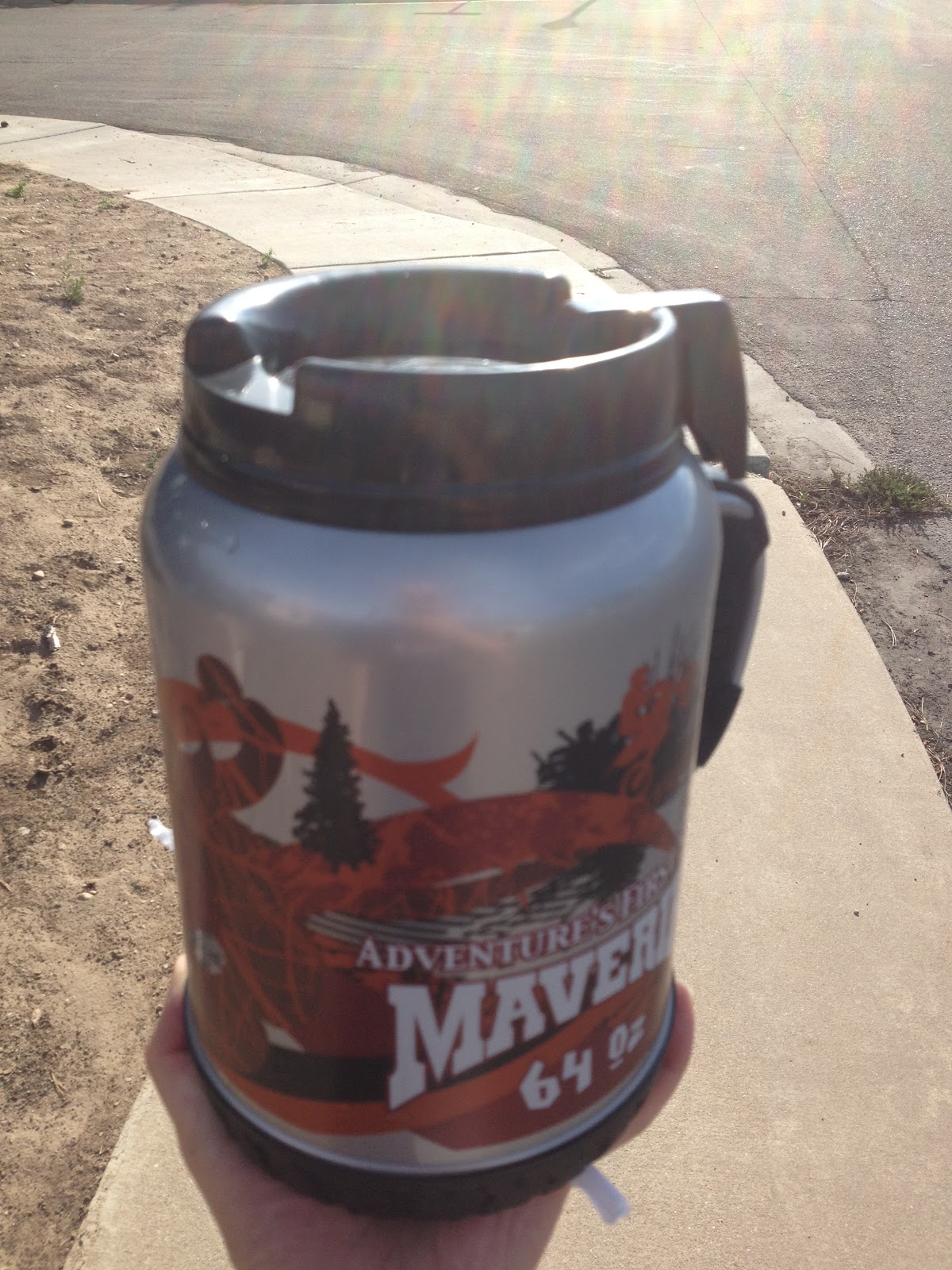
100 oz mug
  • Ron Swanson. I love his remote control door closer. One day I will have one on my office. If you have never looked at the “Ron Swanson Pyramid of Greatness” check it out below.

  • April’s motivational tactics. They may not be as effective as making a means-end chain, but they are hilarious none the less.


Wednesday, September 26, 2012

How to pack a carry-on

Many of my classmates are leaving today to go to the National Black MBA Conference, a career fair for MBA students. Next week I am going to NSHMBA, another MBA career fair in Florida. Since the conferences only last a few days most will be trying to pack in carry-on luggage. I have to admit, before this summer I always struggled to cram everything into a carry-on. Especially with a suit, sports coat and dress shoes.

This summer, I stumbled upon a video by a guy named Joel Bauer on how to pack in a carry-on. He is half genius, half crazy! Some may remember him from "Your business card is crap!"

His video on how to pack is even better. It is about 20 minutes, but well worth it. My favorite line in the video is when he describes a laptop neoprene sleeve as "air tight and water tight like a frogs butt," without even cracking a smile. I would say the video is make up of about 80% crazy, 20% genius. Even with all the crazy, he does have a few good tips. The way he folds his suit coat is awesome and I went out and bought a travel steamer that I use all the time.

So if you plan to traveling in the near future or you need a good laugh, take 20 minutes and watch.

Monday, September 24, 2012

Why are you dressed up?

I get this question at least once a week. I wear business casual every day to business school, but people seem to think you need a reason to dress up to go to school. Don't get me wrong, I love a good pair of basketball shorts and t-shirt as much as the next guy, but in my opinion, business school is enough of a reason. Here is why:
  1. The better you dress, the better you perform. I remember in high school people would show up for finals in sweats and slippers. One year before finals, one of our teachers showed us a study about how you perform being directly proportional to your appearance/dress. I completely agree. If you have ever worked from home or tried to do homework at home, you have probably noticed this. You sit down at your desk but it takes forever to get going. By showing up in business casual, I feel prepared to perform in a business situation and discuss business topics.
  2. Dress the part. If you are attending business school, you should dress the part. I know that some companies offer the "benefit" of wearing shorts and flip-flops to work, but most don't. Business people wear business clothing. If you are attending business school you should probably dress the part. The professors should not be the only ones dressed up.
  3. First Impressions. One of the reasons I came back to school was to build up my network. The network I am building is made up of people I am meeting here at school. Dressing up contributes to my first and subsequent impressions with my network.
  4. You never know who you will run into. Last year I always showed up early for my first class in the morning to prepare for the day. One day while I was sitting in the classroom, a guest speaker showed up early as well. He sat down next to me and we had a 30 minute chat. Turns out he was the CMO for one of the top Fortune 500 companies. Imagine if I was wearing flip-flops and a backwards hat. This year, I have had info sessions pop-up almost every other day. Instead of running home to change, I can take that time to do my research on the company and relax.
So why I am dressed up? To be more successful.

Thursday, August 30, 2012

Duck and Bunny

Quite often companies rush to hurry & sell a product before they speak to their customers about what the customers want. A company will take an idea, vaguely speak with the customer once or twice, pour time and money into developing the final product/solution, then run and start selling. Without taking the time to speak with the customer or put a minimum viable product in front of them, companies often waste their time and money--not realizing they are building one product when the customer really wants something completely different. I am not saying that a company should sit and wait to build anything; rather, they should get the customer involved as soon as possible to avoid building a solution that does not fit.

This summer I saw this play out firsthand. At times, the business units I worked with were so anxious to take an idea and start selling it that they didn't bother to speak with customers to find out if the product they came up with even solved any pain (problem). The customers were then sold a product that didn't fit their needs, or worse yet, that they didn't need at all. As a result, the customers wrote off the company as someone who did not understand their needs or didn't offer products that fit their needs.

We were there to help our client take a step back in the product development process. Before any development even started, we helped the company sit down and speak with the customer to ask about their needs/pains, work with them to find out what they need in a solution, change the hypothesis/product, re-evaluate with the customer, and repeat.

Shifting the focus to solving the pain rather then focusing on shipping and selling seems counter-intuitive and may feel like you are moving slow or not at all. In reality, however, it allows you to move faster because changes can happen quicker, you can easily pivot, and you are not spending months and months on developing one product when the customer really wants something completely different.

In an effort to help our client understand this principle, I created a video that highlights the problems of focusing on development and selling instead of focusing on the customer and their pain/needs.

In the video, the "company" shows the customer a ambiguous drawing that could be interpreted as either duck or a bunny. The customer sees/wants a bunny; the company sees/builds a duck, and hurries to build and sell a product. When the company gets feedback that the customer wants something different, the company hurries to make changes--but since they have spent so much time into building a duck, they can only make small changes to try and make the duck fit for what the customer wants. If the company would have taken a bit more time at the beginning to speak with the customer or involve them more in the development process, they would have realized they were building a duck, when all the customer wanted was a bunny.

Enjoy!


Duck and Bunny from Curt Smith on Vimeo.

Monday, August 27, 2012

Internship

The summer has finally come to a close and I start back at school today. The summer was filled with lots of work, travel and learning. I had the opportunity to intern with a company call "The Bennion Group."


After interviewing at several other companies and turning down a few other offers, I decided to take an internship working at a consulting company in Provo, UT. As I started my search for an internship at the beginning of school, I said that I really did not care where I went as long as it was a large well known company, outside of Utah. As you can tell, I did not stick to my original plan. Not because I did not have offers from big companies outside of Utah, but because I decided to made my choice based off of the experience I would gain.

After speaking with other students about their internships, I am glad I made the decision I did. Although I did not intern for a large corporation outside of Utah, I was able to consult a HUGE corporation (ranked among the top 500 global companies.) In addition, working at a smaller organization allowed me to have a great deal of responsibility as well as gain some greatexperience.

The majority of my work was consulting for a corporate business incubator helping validate business ideas, test markets, develop new products, and help build business plans and go-to-market plans and strategies. We did this through business competitive intelligence, marketresearch, customer interviews, and internal and external analysis. In addition to consulting for other companies, I was also able to help with business development within the company and help prepare training and presentation material.


All in all, I was very happy with my decision to go with a small company and the skills andexperience I gained. I was still able to get experience in a large corporation but still have asignificant impact.


Now, I am excited to return to school for two more semesters and move forward with my career.

Tuesday, May 15, 2012

Why I don't have a Facebook account


I get it all the time, "You don't have a Facebook account?!" (announced with a gasp of astonishment.) No, I don't have a Facebook account...really, I don't. I didn't just get fed up with Facebook one day and delete my account. I never signed up for one, never have, and never will.

I know many people probably wonder how I can consider myself a marketer and say that I understand social media, but not have a Facebook. Before I get too far let me point out that I have had business Facebook accounts (and that plays into why I will not have a personal one.)

Don't get me wrong, its not that I hate Facebook or anything. I think Facebook is a great social media tool, and have seen first hand the power of it using it as a marketing tool.

So then why don't I have a Facebook account?

1. If you are not buying the product, you are the product.
Facebook is about to issues one of the largest IPO's in history. That can tell you exactly what your information is worth. Having worked on the other side of social media, I can tell you it is amazing what information you can get from people Facebook accounts, especially if you are willing to pay for it.

Yes I know that Twitter, Gmail, Linkedin, and all other social media have a similar method of revenue, but I see more personal benefit to those services.

2. It's a huge time suck.
I can't tell you how many times I would walk past students on campus (even during finals week), nurses at the doctors office, government employees, and friends, all wasting time on Facebook when they should be doing something else. People seem to get sucked in and never leave. I have enough time wasters, I don't need another.

3. It distracts people from personal interaction.
I hear it all the time. Instead of talking to someone, calling them, or even texting someone for goodness sake, people just log on to Facebook to find out about a friend.

4. Controlling your brand.
I think few people understand what they risk by posting things on Facebook, and even worse, what their friends post. Call me a cynic, but I don't trust everyone else on Facebook to keep my best interest in mind when they "post on my wall" or tag me in a photo. I prefer to have more control over my personal brand.

5. Facebook etiquette.
When do you friend someone? Do you friend your boss? Will they be offended if I un-friend them? It is much easier to just say "Sorry, I don't have Facebook."

Ultimately I think it comes down to value offered in exchange for your information. And with Facebook, I just don't see the personal value being that great, especially with so many negatives.

Tuesday, May 1, 2012

DECA

DECA logo

In high school I participated in DECA, and it was a great experience. DECA was where I got my first exposure to business and marketing and it really drove my decision to pursue business and marketing as a career.

So what is DECA? At one time DECA was an acronym for 'Distributive Education Clubs of America.' They have since dropped the acronym and now it has the tag line: "DECA prepares emerging leaders and entrepreneurs for careers in marketing, finance, hospitality and maagment in high schools and colleges around the globe."

DECA was a great program for me. A large part of DECA are the competitions. Each student has the opportunity to pick a focus to compete in. At the competitions they take a 100 question test and participate in 2 role plays. The role plays are like mini case studies. They have 10 minutes to read and prepare before role playing with a judge for ten minutes. It's pretty intense.

Yesterday I had the opportunity to judge a few events at the National DECA conference that is being held in Salt Lake City. It was a great experience. Over all, I was very impressed with what the students came up with in 10 minutes. I remember well, sitting on the other side of the table during the role plays. It was fun to sit and think about about how DECA opened my eyes to marketing and business years ago, and I was glad I had the chance to give back just a little and help out the current students. I hope that DECA can make as much of an impact on the current students as it did on me.

And good luck to the finalist at nationals today!